Common Cash Flow Mistakes
Are You Making These Cash Flow Mistakes?
Cash flow is the fuel in your tank that can propel you to greater revenues, profits and wealth. You can generate your own cash from operating profits, fund it from bankers and investors, or do both.
Phil’s Profit Points™ in Brief:
Cash flow is the fuel for your ongoing business operations and for your future growth.
If you can’t generate cash internally, you’ll need to source it externally with debt or equity.
The most common mistakes include: not knowing critical business information around your gross profits and margins by product and service line, not knowing total days to cash, and not focusing on volumes that can sustain and grow your business.
Are You Making These Cash Flow Mistakes?
The Symco Cash Flow Formula: C = M V^2
Cash flow = Margin x Velocity x Volume
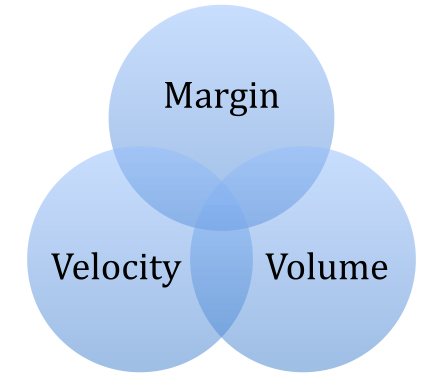
Here are the most common mistakes that we see in cash flow.
Margins: are measured in terms of percentage. Margin is price less cost of sales. For example, if you sell a product for $120, and the labor costs $55 and materials cost $35, then your cost of sales is $90. Your gross profit is $30 ($120-90). Your gross margin is 25% ($30/120).
Common mistakes:
Many businesses don’t know the margins by product or service line, by customer, by department or division.
Variable costs aren’t tracked.
Overhead costs aren’t tracked.
Break-even sales units and dollar volumes aren’t known.
Pricing isn’t structured.
Pricing is too flexible and margins are lowered to get business in the door when business is slow.
Marketing is weak and doesn’t strengthen pricing.
Customers exert price pressure.
Marketing isn’t driven to deliver specific sales each month. This results in cyclical revenues and profits (and losses).
Velocity: measured in total days to cash or total days of sales outstanding. For example, if your average monthly sales are $2 million and your accounts receivable are $3 million, then your total days of sales outstanding are 46 days (3/(2x12) x 365days=45.625). If it takes you six days to deliver the product or service and issue the invoice, then total days to cash is 52 days (46+6).
Common velocity mistakes:
Don’t measure total days of sales outstanding or total days to cash.
Don’t take steps to improve total days to cash.
Let the customer dictate when they will pay.
Don’t offer discounts for quick payment.
Contracts don’t specify that payment terms are net fifteen days.
Don’t accept electronic funds transfers or credit cards for payments. (My European friends haven’t seen a check in ten years.)
Don’t cut off customers who are overdue.
Let holdbacks continue to build up as the project expands due to continual change orders and add-ons.
Volume: refers to the volume of cash inflow and outflow.
Common volume mistakes:
Creating self-inflicted cash flow problems by using short-term cash (that should be used for working capital) for long-term purposes such as purchasing equipment instead of financing or leasing the equipment. The financing source should match the expenditure’s life span.
Being reactive and relying on customers to drive sales volumes.
Lacking formal marketing and sales strategies that generate new business and create a solid pipeline of future orders.
Having a high capacity or high overhead structure that cannot, or is not, scaled back to a decrease in sales.
Failing to take quick action to permanent decreases in business.
Failing to notice changes in customer preferences or market conditions.
Ignoring new competitors.
Failing to obtain financing resources that can leverage profitable growth.
Creating capacity (land, buildings, equipment) to satisfy future demand instead of scaling up gradually or outsourcing until future demand justifies the capital investments.
In Conclusion
Cash flow is the fuel that will sustain your future growth. Increasing your margins, accelerating your velocity and boosting your volumes will all help to generate more cash for your business and more wealth for you.
Tough Question
Is your business creating or consuming cash? How do you know?
From the Piggy Bank
Every business should have its own piggy bank of cash reserves to fund growth opportunities, cover contingencies, and provide a base for future growth and leverage.


