The Power of Pricing
Following up on last week’s article on the Four Ps of Pricing, let’s discuss the strategic purpose of pricing.
Here are the Four Ps of Pricing.
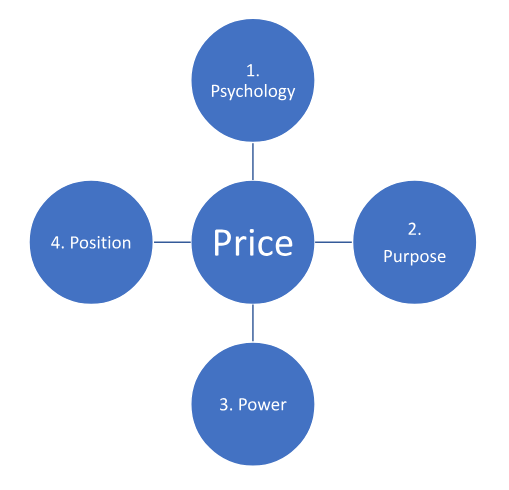
2. Purpose
My favorite quote is, “when you buy quality, you only cry once.”
We all know that you get what you pay for, and that cheap stuff is often a waste of money and time to replace it with something better. Your price is much more important than just generating revenue.
Your price indicates several variables, directly and indirectly, to your customer or client, about your:
Anticipated experience
Convenience
Differentiation
Expected benefits
Importance
Quality
Value
The most often overlooked of these factors, unless you’re running a high-end steak house, is experience.
I’ve visited higher-end retail stores where the service was absent, apathetic, and abysmal. The clerks did not know - and were not trained - that the person buying pen refills today may be buying a pen or referring a friend to buy a pen tomorrow. That’s a management issue.
Hint, it’s always a management issue.
Even if your customers order online and never speak with your employees, they are still experiencing your business, and the power of its search features and ease of ordering.
When interacting with your employees, there is even more opportunity to make it a positive experience with no or low cost to you.
The purpose of pricing is to provide such a great experience for your customer that they forget about the price, and only think in terms of the great experience, and high return on investment, they’re getting from you.
Have a good week!
Call to Action
If you’d like to assess your pricing strategies and effectiveness, give me a call at 855-904-0087


