Scorekeepers
A Good Accounting Department, Part Two – The Scorekeepers
What’s the score? Are you winning or losing?
During a football game, all the players and fans need to know what’s on the scoreboard. It shows the score, time remaining, quarter, downs and yards to go. The coaches and players use this information, and their analysis of their competitor’s strengths and weaknesses, to call and execute the next play in order to gain field position and eventually score. It’s real-time decision making. That’s what makes watching football one of the most exciting sports (after hockey, of course) on television!
A good accounting department has skills in measurement, information systems and reporting information and these can be used to create dashboards for management and enhance decision-making. Don’t relegate your accountants just to be your historians. Use their talents and resources to provide you with a live scoreboard.
Examples of real-time information were previously mentioned in an earlier Phil’s Profit Points™ and should include the following:
Prospects showing the potential sales from new and existing customers.
Sales orders showing the confirmed pipeline of future work.
Daily production reports that measure actual output in units and dollars.
Project status to indicate projects that are on-time, ahead of schedule or late.
Job costing that measures actual profits-or losses-on customer jobs.
Cash flow in/out and the balance on hand.
The scorekeeping function should be generating this dashboard daily, or, at least, weekly.
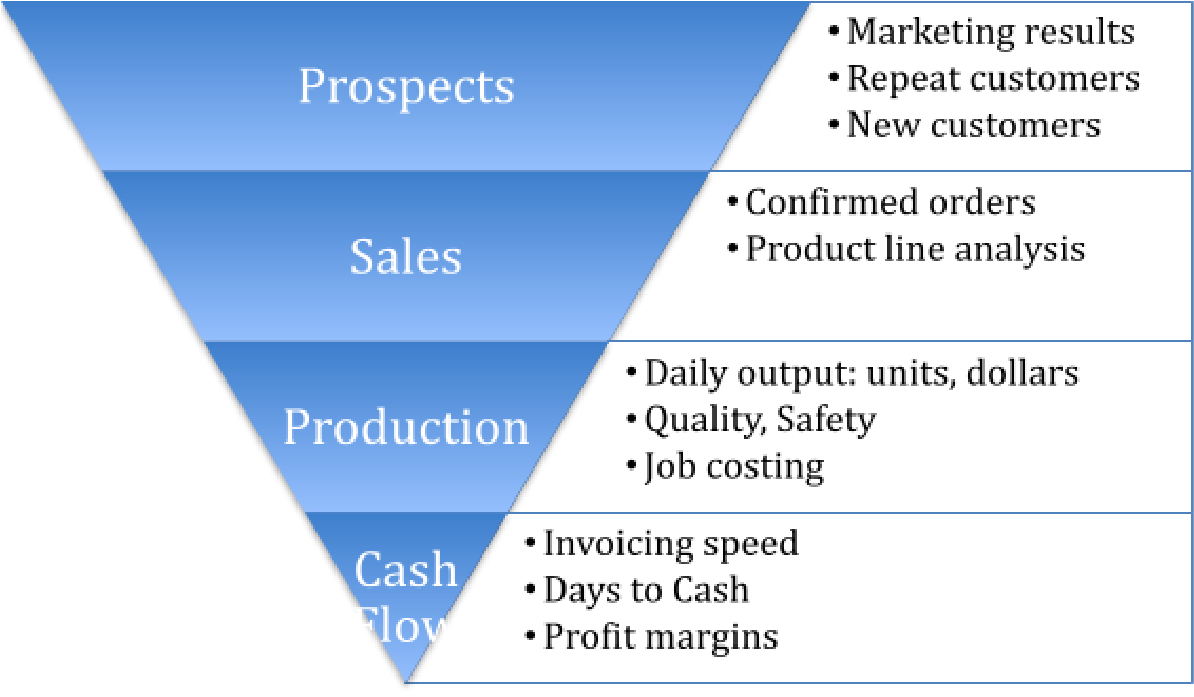
Speed of information is more important than accuracy when you’re first setting up a dashboard. The accuracy will gradually improve as the information flow is enhanced. The most important metrics are the sales order pipeline and production speed. For example, $2,000,000 of confirmed sales divided by $250,000 of production per week equals eight weeks of production.
Key questions for your management team:
What marketing activities are generating sales most effectively?
What are the sales splits between existing clients and new clients?
How many weeks of production do we have booked in sales?
Is our production getting faster or slower and why?
Is our quality improving or decreasing and why?
Are our profit margins increasing or decreasing and why?
Is cash flow – measured in velocity (days to cash) and volume (profit margins) – getting faster or slower and why?
Key questions for your front-line sales and production people:
What questions are customers asking you?
What objections are you hearing?
How are we priced compared to our competitors?
How does our value stack up against competitors?
How can we increase production speed?
How can we get paid faster?
Tough Questions for You
How often do you receive your dashboard? Is your dashboard helping you call the next play? Is it keeping your team and your customers focused on what needs to be done next?
From The Piggy Bank
The faster your team knows the score, the faster they can react and improve it.
Have a profitable week!


