
ROI
Return On Investment
This article will help you to analyze your business results and strategic investment decisions.
Phil’s Profit Points™ in Brief:
The single most powerful financial measure in business is Return On Investment because it compares the results and position of both your income statement and your balance sheet.
Return On Investment can be used to analyze business units within a company, companies, industries and even countries.
Return On Investment presents the economic reality that is contained in your financial statements.
Welcome to issue #52 which celebrates our first year of Phil’s Profit Points. In this segment, we’ll look at how you can measure your Return On Investment.
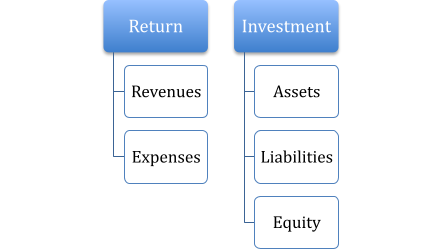
So that we’re all on the same page, here is the formula:
Returns (revenues minus expenses) / Equity (assets minus liabilities) = ROI, expressed as a percentage.
First, I want to expand and improve upon this highly useful financial metric. In finance, Return On Investment simply means that you calculate the financial returns and divide by the investment.
Here’s a simple example: If you have net income after tax of $2 million and you have equity on your balance sheet of $4 million, then you have a Return On Investment of 50%.
If you pulled out half of your equity by paying yourself dividends and parking the money in your holding company or some other safe investment outside of your operating company, your Return On Investment would be $2 million / ($4m-$2m) = 100%. That’s even better.
The main goal is to maximize your returns while you minimize your investment…since the investment in your business carries risk.
Ironically, many people minimize their returns by taking aggressive tax minimization strategies that reduce profits - those are your returns - in order to reduce taxes.
This is very harmful if you are trying to grow your business and/or you are using debt to help you grow your business. Make sure that you tell your tax professional that you are trying to maximize your wealth, not just minimize your taxes.
Remember, the net income earned in the current year is added to your retained earnings and creates the equity base that supports financial leverage such as debt.
That’s why you always want a strong and healthy balance sheet with lots of equity to support debt or dividends and lots of earnings and positive cash flow to fund the debt servicing and dividend payments.
It’s important to know that there is no magic number. The optimal Return On Investment for your company depends on what you are trying to do and what position your business - and you - are in, such as: start-up, growth, plateau, decline, exit (hopefully, not in that order, in fact, never in that order!). Hint, growth is good, always.
The most powerful way to use Return On Investment is to look at your business divisions or profit-centers in this way. This forces you to create a balance sheet and an income statement for each division, just like large, public companies or conglomerates do.
You can’t possibly know which divisions or even product or service lines are the most profitable or are losing you money if your income statement lumps all the revenues in one line. That’s just about negligent, if you ask me. Management needs detailed information to evaluate results and improve them in the future.
Let’s take the Return On Investment concept even further. Returns can include financial and non-financial benefits. If you are a business owner and hire your first full-time general manager, this investment will reduce your net income and will reduce your Return On Investment. However, this should provide you with much freedom to work on more strategic things that will grow your business or, more importantly, freedom to work less.
The most important concept of Return On Investment is to identify the factors that actually improve your business and your life.
Tough Question
What are the most important returns that you want from your business?
From the Piggy Bank
The best entrepreneurs spend as much time improving their personal return on investment as they do on their business return on investment.
Have a profitable week!


