
Profit Potential Pricing Matrix Part 2
Last issue, we introduced the pricing matrix and discussed the first three factors: customer knowledge, being proactive and being responsive. In this issue, we’ll discuss three more pricing matrix factors:
Convenience
Information
Relationships
When I’m flying and need to work on the plane, I’ll try to purchase an upgrade to business class so that I have more room. Here is the usual conversation, often at 5:30 in the morning.
I asked the gate agent, “is the plane full?”
“No,” is the answer.
“Are there seats available in business class?”
“Yes, sir,” is the monotone response.
“May I buy the upgrade, to help your airline maximize its profitability?” I ask with a smile.
They grin, and say, “You can’t buy it here, but you could go back out through security to the ticket counter, and buy the seat upgrade.”
Here’s the kicker: I can buy an upgrade to an exit row at the gate but can’t buy an upgrade to business class. That just doesn’t make sense. Nobody drives their customers as crazy with lousy service as the airlines, I’m sure.
Now, let’s discuss the three new pricing matrix factors.
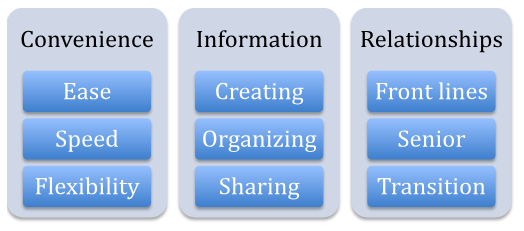
Convenience refers to the fact, regardless of your business or industry, that you can’t make it too easy or too much fun for your customers to do business with you. It’s easy to order your computer online and select the hardware options that you want; it’s more difficult to select upgrades in the computer store. It’s fast to order office supplies and have them delivered the next day, usually for free. My plumber is flexible and will let me add on a couple of things when he is here, but I can’t add half a day’s work, because he’s already scheduled.
When your people are on-site, or you have clients attending your workshop, do you make it easy for them to discuss how you can help them be even more successful?
How fast do you respond to your customer’s requests?
Can you adapt or quickly schedule a follow-up to new customer requests?
Information is the tangible data created from your knowledge, work processes, project tracking and reports (internal and external) that you create during your work. If you perform an industrial service call, you would document your work performed, time spent and materials used on a control sheet. You give the customer this information on your daily work report. You’d be surprised at how poorly some of your very large customers manage this incoming information. That creates a huge opportunity for you to be more valuable (and subject to less pricing pressure).
Do you create important information such as project summaries to track status, challenges, solutions and proactive recommendations?
Do you organize important customer information, perhaps by your customer’s piece of equipment, facility or location?
Do you share important information with your customer’s head of operations, or your highest level contact, in a monthly or project highlights meeting? A face-to-face meeting will allow you to have a good conversation about how you can help them further improve.
Relationships are the formal and informal people interactions that you deal with every day with your customers; from initial quotes, to project reports to invoices and accounts payable.
Senior relationships are with your customer’s decision makers. How do you manage, document and improve senior relationships?
Front line relationships are with site foremen, workers, purchasing and logistics people, that you deal with every day. How do you manage and improve these front line relationships?
When your customers appoint new people to deal with you (if someone retires, for example, and that’s happening more often now), do you provide an information package to help them quickly learn how you do business together and to be more successful?
Here are the three additional pricing matrix factors and their key points.
Tough Question
How does your business use convenience, information and relationships to improve your pricing?
From The Piggy Bank
The easiest sale is to your existing customer while you are providing your service or delivering your product. The most difficult, expensive and lowest probability sale is to a non-customer who isn’t aware of a need.


