
Pricing Matrix Part 3
Profit Potential – What’s Your Pricing Matrix? Part III
Pricing is the most powerful way to improve your profitability, strengthen your customer relationships and differentiate your company in a sea of commodity competitors.
Welcome to this week’s Phil’s Profit Points, issue number 31, where we discuss three more pricing matrix factors.
The factors are:
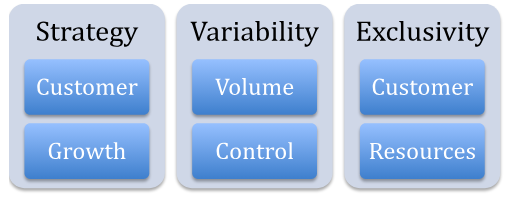
Let’s discuss the three factors and their key components.
Strategy refers to the process of inviting your customers to participate in your strategy development sessions. Does this sound terrifying? It’s not. This is a great compliment to your customers and will definitely strengthen your relationship. Your customers can share insights of their expectations, how they use your product or service, how you can improve delivery and how you can reduce waste or cost for components that they don’t value.
Your customers, especially if they are Fortune 500 companies, are often willing to share a wealth of information with you. Which customers can contribute to your strategy?
Which customers have significant growth opportunities and can help you be more successful by aligning your strengths with their future?
Variability refers to having multiple pricing levels, or tiers, depending on several cost drivers. For example, emergency service could be priced higher than scheduled service. If a customer commits to buying a certain volume of products or services, you could offer them a lower price or a rebate at year-end (preferred) based on their actual purchase volumes.
Volume can refer to the total quantity, frequency, dollar value or breadth of products and services that your customer purchases. How can you improve your pricing by giving your customers variable pricing based on their purchase volumes?
Control refers to how much your customer dictates and controls the purchase transaction. Do your customers request immediate service, staggered production, or batch production stored for their convenience? How can you exert control so your customers are purchasing in ways that optimize your production, reduce your costs (tooling change, remobilization) and increase your margins?
Exclusivity refers to the practice where you allocate certain resources such as people or production capacity for a certain customer. One industrial client has a team dedicated to a specific, large customer. The customer benefits from having the same people become familiar with their facilities and their people. The service company benefits from being able to schedule work for long periods of time at reduced overheads and cost of acquisition.
A strong customer relationship will allow you to work together and develop solutions that benefit both you and your customer. Which customers would be most receptive to an exclusive arrangement with you?
Resources are your time, people, production capacity, expertise, information, processes and knowledge. Which customers would value having exclusive access or priority access to your wealth of knowledge, experience and value?
Tough Question
How can you use strategy, variable pricing and exclusivity with your customers to improve your pricing?
From The Piggy Bank
Giving your customers multiple pricing choices will increase the likelihood that they will buy from you, will decrease your competition and will increase your profitability.


